
This past Saturday morning we had another Parents & Kids event at Lolakana that bisected my dayjob—I started just before midnight on Friday and then went long into the evening afterwards, fitting in [naps throughout the day].
The effort is worth it.
The event was a hit and it's always a lot of fun hosting something that's both jiu-jitsu focused and allows families to have fun together.
It's something we do throughout the year and if you're in Victoria, British Columbia, [shoot us an email] and book your spot for the next one.
These events hit differently when it's your gym—Jessica and I own Lolakana, and most days we're in the background while the rest of the team runs classes. Balancing the gym with the dayjob is a lot and there's a tendency to just keep moving, but since the start of the year I've been making a conscious effort to pause throughout my day and just indulge in the moment.
To be present.
To be grateful.
Yesterday—in the middle of the Strong Monkey back control drill—I did exactly that.
The overwhelming feeling was awe.
But also a little bit of confusion...
What's Happened to Jiu-Jitsu?
This wasn't the sport—the martial art—that I started with 26 years ago.
Nobody was marketing this sort of thing back in my hometown of Kelowna and if they were I wouldn't have come across it. The club I started at was MMA-focused, but that label wouldn't exist for a few years at least.
No-holds-barred and vale tudo were terms the people in the scene used.
Go ahead and imagine trying explaining mixed martial arts to someone without using the term.
If you think you'd just reference the UFC, you'd either have to explain the sport to someone unfamiliar (and bore them), or defend it if they had heard of it, because their exposure was likely through the mainstream media narrative that "ultimate fighting" was wanton barbarism.
Instead, the club offered muay thai and "submission grappling"—basically no-gi jiu-jitsu with MMA gloves.
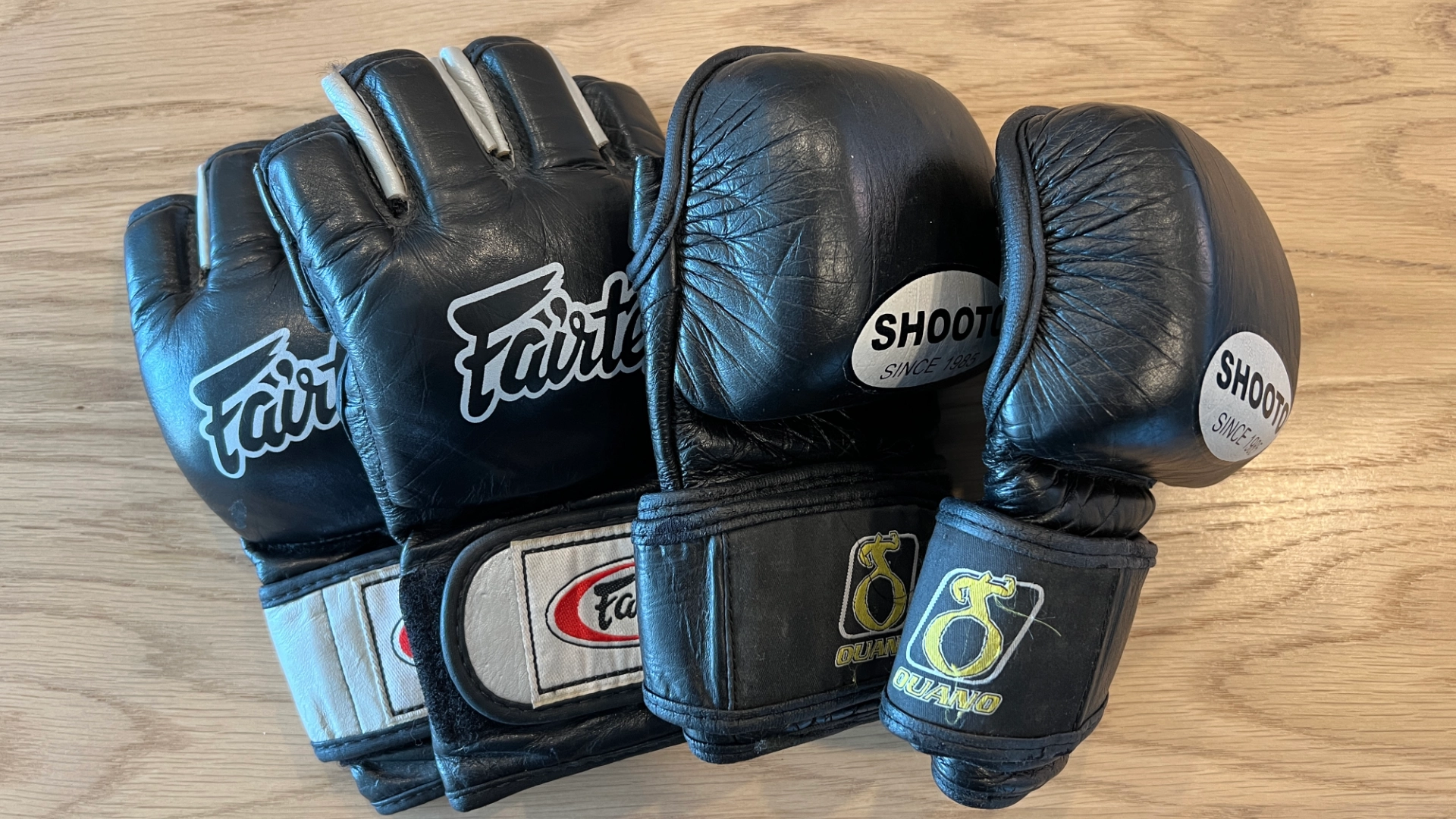
I was hooked. I made it to as many classes as I could, and as the years went by I moved on to different clubs that had started separating grappling and striking.
I got my first real taste of sport jiu-jitsu.
From that first club to the second was five years.
And I didn't just fall into it after seeing an Instagram ad.
Pro Wrestling Is the Strongest Style
In the 90s as a pro-wrestling fan trading VHS tapes in the mail.
ECW, CMLL, All Japan, New Japan and death matches, but at the time shoot style was a favourite of mine. My buddies and I were obsessed over what was real in pro-wrestling, and shoot-style blurred those lines completely.
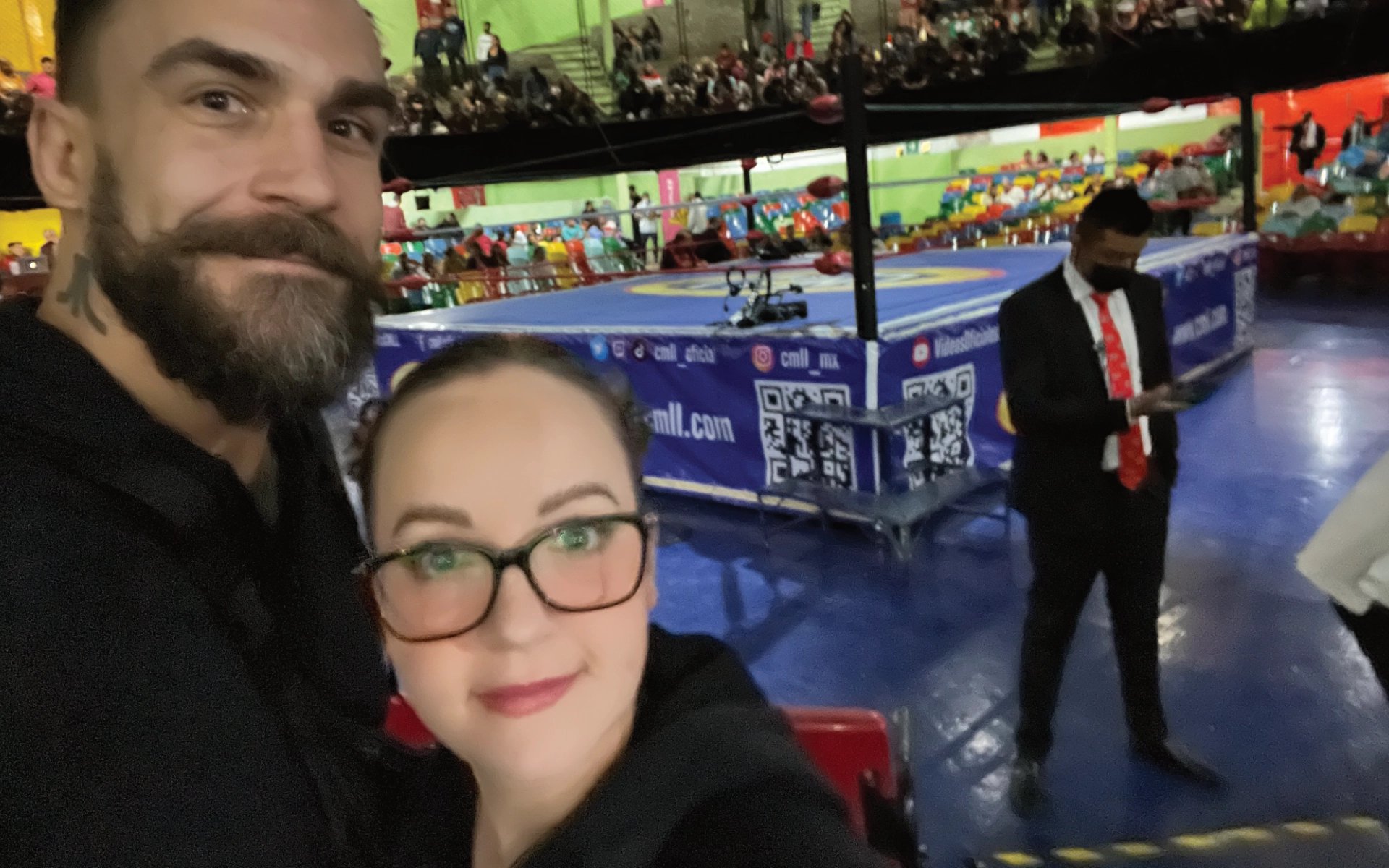
Throw the occasional Shooto and Pancrase fight, plus cam footage from cards that featured both pro-wrestling and legit fights and I didn't know what I was watching anymore.
I loved it.
A few years later I started hanging out with people in the local MMA scene and began watching UFC and PRIDE cards with actual competitors. I eventually asked about how classes worked. I didn't really want to be a fighter or anything—I just loved submissions. In pro-wrestling they're worked. Here they were real, and could learn to do them.
But I Still Don't Know How We Got Here
Standing on the mats, watching five year olds take back control on their parents, I knew why everyone was there:
- jiu-jitsu is awesome
- we advertised the event
- people showed up to have fun with their kids
But I didn't understand how this all happened.
Back in the truck before restarting the dayjob, I spent 15 minutes drafting a research prompt in Gemini. I thought it was mostly the MMA connection—that's how my mother finally understood what jiu-jitsu is—but it didn't come up at all in the initial results:
It's Joe Rogan's Doing
Actually, Gemini came back with five possible explanations, beginning with Joe Rogan:
1. JRE
If we are looking for a "Patient Zero" for BJJ's mainstream appeal, it is almost certainly The Joe Rogan Experience.
- The Medium: Rogan began his podcast in late 2009. As it became the most-watched show in the world, he spent thousands of hours evangelizing BJJ not just as a sport, but as a "high-level chess match" and a tool for mental health.
- The Demographic: He reached the exact demographic (young to middle-aged males) that had the disposable income to afford pricey monthly academy memberships.
This definitely tracks, but surprised me because it seems like Joe had actually been doing the podcast forever—in fact, the first episode was December of 2009.
2. The Gentle Art
Unlike Boxing or Muay Thai, where you eventually have to deal with the reality of being punched in the face, BJJ offered a unique proposition: Live sparring with 100% intensity and near-zero brain trauma.
- Sustainability: This allowed "hobbyists" to train for decades.
- The "Chess" Hook: The complexity of the guards, sweeps, and submissions appeals to the analytical mind. It’s addictive in the same way a video game is—there is always a new "unlockable" technique.
This maps exactly onto why I stopped all striking around 2009 and the intellectual puzzle is something that constantly comes up nowadays when I'm discussing the sport with outsiders and explaining why I love it so much.
3. The Shift to Athletes & Players
In 2007, your gym probably had a "tough guy" culture. Since then, the sport has undergone a massive rebranding:
- Professionalization: Organizations like ADCC, IBJJF, and Craig Jones’ Invitational (CJI) turned BJJ into a spectator sport with high production value.
- The "Anti-Bully" & Self-Defense Narrative: The Gracie family and others pivoted their marketing toward children’s programs and women’s self-defense, making the local "Fight Club" feel like a family-friendly community center.
This also tracks.
Lots of places still have the tough guy culture.
At Lolakana we're definitely focused on the hobbyists, community and growing the sport in the family-friendly direction.
The tough guys (and gals) will just become an intrinsic part of process.
4. Celebrities
BJJ became the trendy workout for the Hollywood and Tech elite. When people saw Anthony Bourdain, Keanu Reeves, Tom Hardy, and Mark Zuckerberg posting photos in a Gi, it stripped away the "thug" stigma. It became a status symbol for discipline and grit.
This made me go "ohhhh yeah...".
Full disclaimer:
My celebrity crushes that play BJJ are Anthony Bourdain, Dave Bautista and CM Punk.
5. The Fashion
The rise of "No-Gi" grappling removed the barrier of the heavy, expensive kimono.
- The Aesthetic: Brands like Shoyoroll and Venum turned BJJ gear into a fashion statement.
- Social Media: BJJ is highly "Instagrammable." The visual of a "submission of the night" or a sleek technical transition fits perfectly into short-form video algorithms (TikTok/Reels).
This one is a big one for a lot of the women I speak with about jiu-jitsu—what to wear and how it looks.
Jessica and I have matching pink gis—I'm a white gi guy most of the time but have always liked pink, and became comfortable wearing it from our time in Korea where it's not uncommon for men to wear... and I'm a big Gene Lebell fan.
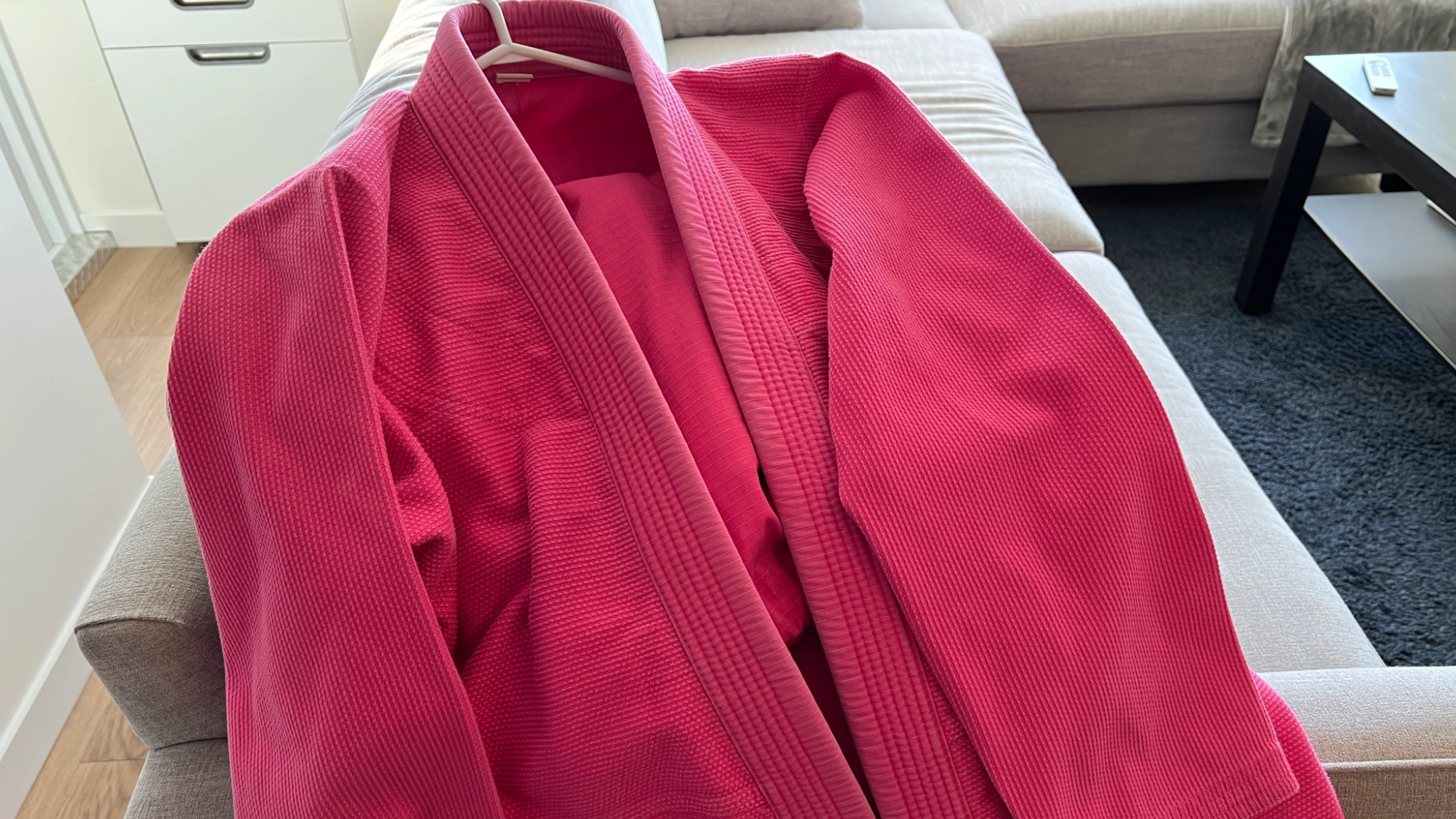
Men care about this sort of thing too, but most of us keep the verbal enthusiasm bottled up inside.
What To Do About All Of This
There's dilution happening.
Forces trying to pull the sport away from something real that happens on the mats.
People conflating time spent consuming content, creating content, discussing jiu-jitsu with actually playing jiu-jitsu.
It's a problem.
And there's a temptation to protect what was and say that it's not for everyone—it's a combat sport, after all.
But gatekeeping isn't the solution.
When I started 26 years ago, I think some of the people who could have become the best players in the world—who could have contributed to the sport, preserved the important traditions, shaped what it is today—ended up somewhere else. They never found it because it was too obscure, too hard to access, too wrapped up in tough-guy culture.
I only got in because of a passing conversation.
Now it's in the culture. Outsiders see Instagram ads. They hear their co-workers talking about it and probably heard it was something Joe Rogan evangelizes.
But it remains a combat sport. It's not going to be for everyone.
But right here and now there's never been a better time for everyone to try.
In Victoria, British Columbia?
Lolakana Martial Arts has 20+ classes a week for both adults and kids in Brazilian Jiu-Jitsu, No-Gi Jiu-Jitsu and Kickboxing.
Free parking.
Indigenous-owned.
Unlimited Free Trial Week: https://lolakana.com/contact/


