

I don't want to go to jiu-jitsu this morning.
It's Monday at 05:43 AM as I write this and I'm sitting in a supremely comfortable Herman Miller chair, at an ergonomic desk set to just the right height with a hot cup of coffee in front of me I just made with the Aeropress.
I went to bed a little too late last night and did the thing where I woke up an hour before my alarm was set and tossed and turned because I had to pee and was just ignoring it.
So it doesn't feel like I got enough sleep. (Does it ever feel like enough?)
And it's raining and cold outside.
And I have a serious amount of work to do.
Right now, I can't find the motivation anywhere. It feels like I'm always like this every morning.
I know it's not true. But it feels true.
But in two minutes I'll get up and put my stuff together and ten minutes later I'll be out the door.
Motivation Is Overrated
It gets us to buy the gym membership.
It doesn't get us to class six months later.
I turned a corner when I found BJ Fogg's Tiny Habits. This graph hit me so hard the universe seemed to slow down:
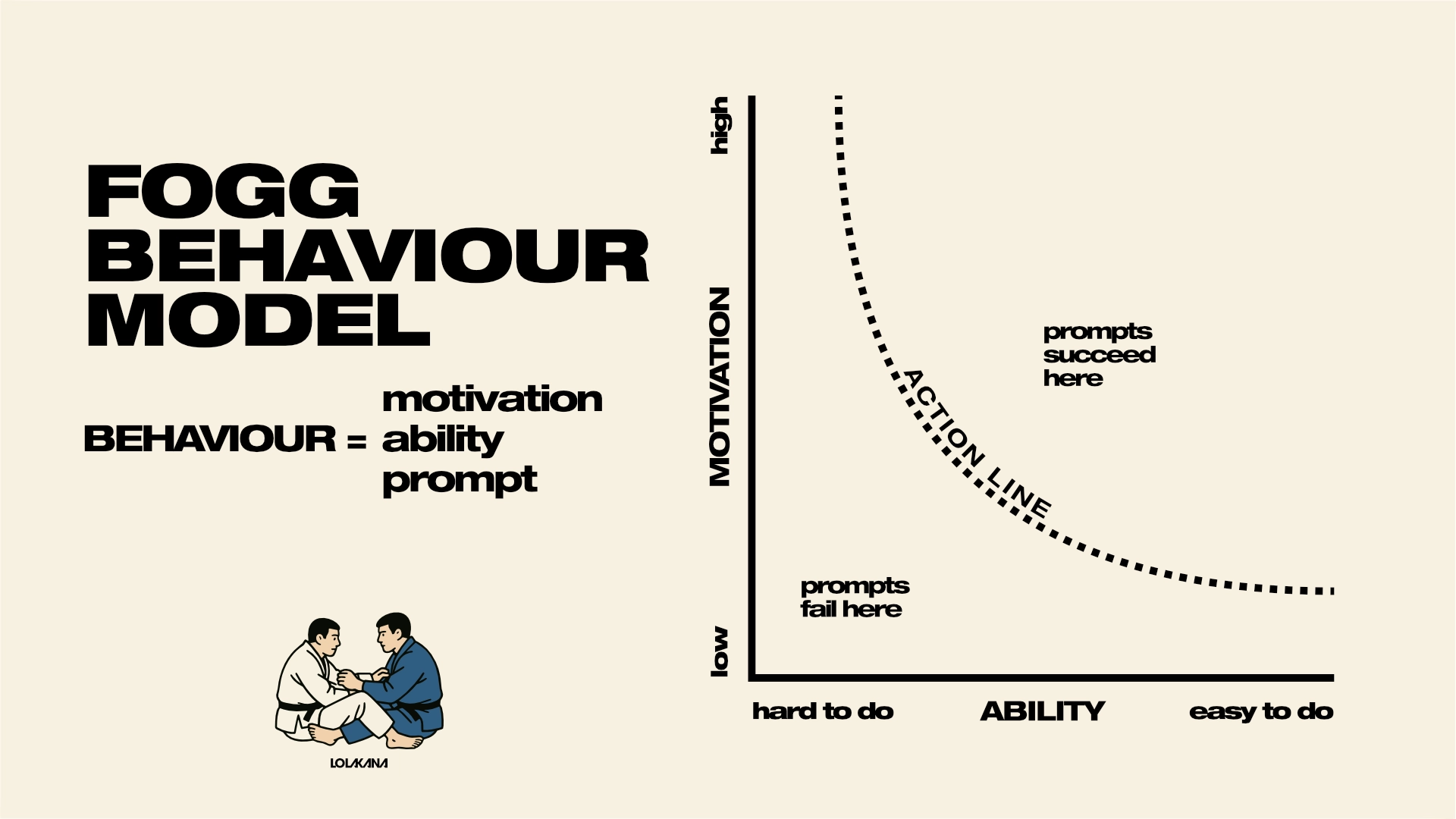
Motivation is a temporary emotional state. Ability is the combination of time, money, physical effort, mental effort and routine that we have available to us. When our position falls below the Action Line, we quit.
In that moment there was a rush of memories—all sorts of things I tried to do throughout my life that were temporary, or some version of on again, off again. At the time it was guitar. Photography. Eating healthfully. Jiu-jitsu.
Thinking back further I understood why stuff like going to the gym to lift, drawing, business ventures, and even the girls I dated before I met my wife didn't work out.
I guessed that the book would give me these answers.
Why I failed at certain things.
Why I was succeeding at others.
And not only the stuff I wanted to do more of, but also the stuff I wanted to do less of.
Snacking. Alcohol. Weed. Porn.
I guessed right.
The solution wasn't more motivation, or rationing it better—trust me, I spent forty years trying that. It's using that temporary high, the buzz of motivation, to do the work that makes the behaviour easier.
Then easier still.
Then, like my jiu-jitsu habit now, almost automatic.
The book gave me the pattern. Here's the link. (Non-affiliate).
The Illusion
We buy the membership and automate the payment.
Choose the classes we want to attend and put them on our calendar and hollow out the time.
We plot out our commute.
We (probably spend too much time) researching and buying the stuff we'll need and probably follow a few extra accounts on social media now that we're committed.
We stage our gym gear in our bag and put it somewhere obvious.
And then we just go.
All the novelty triggers what neuroscientists call a "Positive Reward Prediction Error"—our brains flood dopamine into the system to signal "this is new, pay attention, learn." There's times I've been in this state and it's like I was high on cocaine the world becomes my oyster. All I could see was the destination—how awesome jiu-jitsu was and how great it would be to fit it into my life permanently.
But our brain learns to predict the outcome, and as the novelty wears off, that dopamine spike flattens and the weight of everything except jiu-jitsu creeps in.
The commute.
Laundry.
Eating.
The knock on effects of adding all of this to our schedule permanently.
Then we get sick, or injured.
Or there's just a holiday.
And slowly, it all falls apart.
I could always feel it.
I can always feel it.
For jiu-jitsu at least, I've done this long enough that the adjustments nowadays are minor and obvious, so I wanted to share some of the bigger changes that have kept it permanent for a long time now.
My Calendar & Checklist
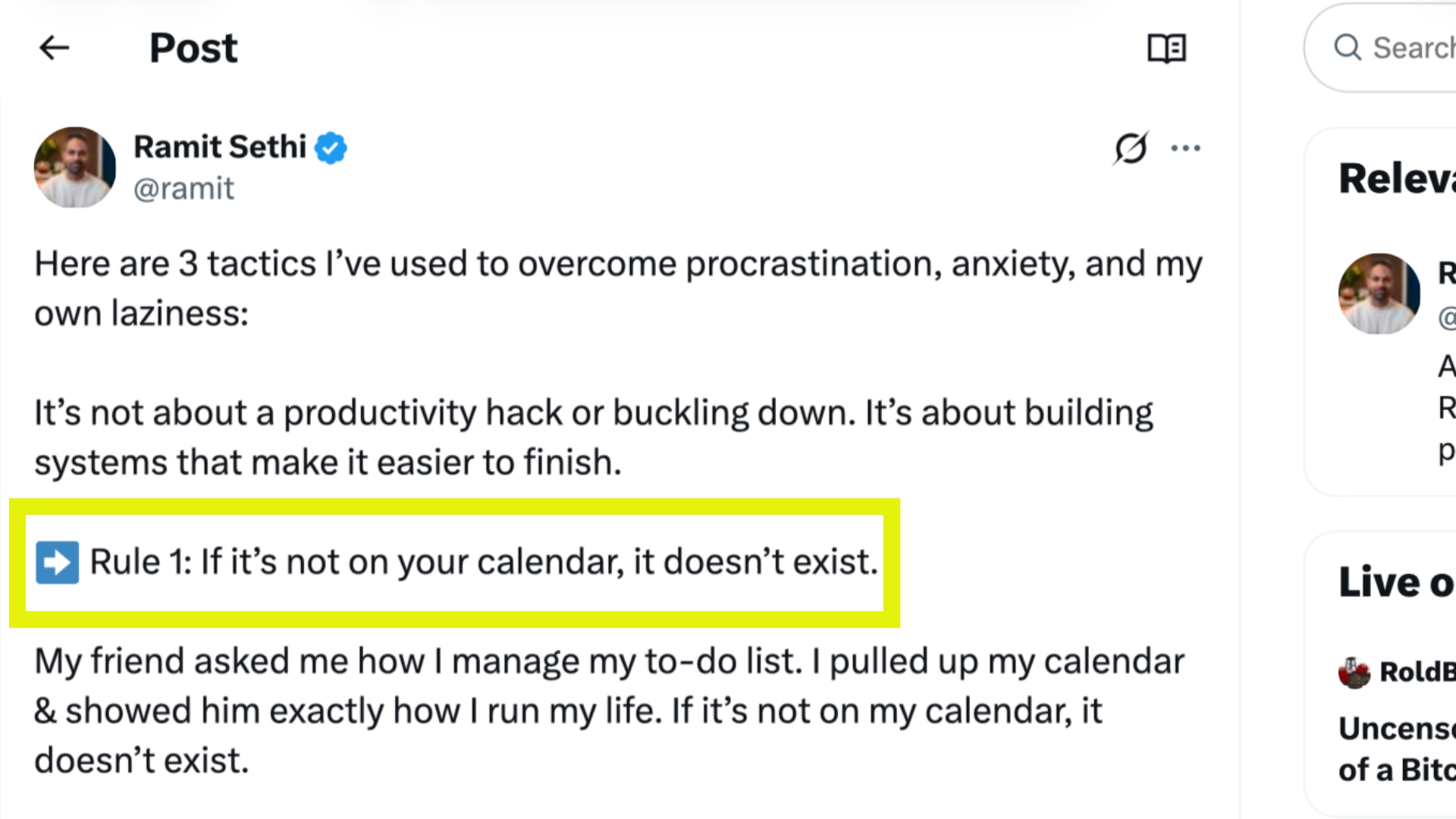
If it's not in my calendar, it doesn't exist. (Thanks Ramit)
I use Fantastical to sync multiple calendars across multiple services. For my checklist I used Things for years, but switched to Todoist when I finally convinced Jessica we needed a shared grocery list. I'm not getting paid by either—I've just used their services for years.
I live by a couple rules from David Allen's Getting Things Done (non-affiliate link):
- If I can do it in less than two minutes, I do it right away
- If it takes longer, I capture it in Todoist, or a text message or index card or scrap of paper and put it into Todoist later
- A task is a single step—anything with multiple steps is a project
Between the two, everything I need to do is captured. Recurring events repeat automatically in both. Every morning starts with a 15 minute journal entry and then a check of both. I'm constantly referring to them throughout the day.
Here's the weird part: once everything was written down, I could finally forget it all.
I used to be forgetful because I didn't have a system. I resisted. What if my calendar wasn't there? What if I lost my checklist? (This started in the 90s when a calendar and checklists were paper things).
But what actually happened was the opposite of what I expected. With the calendar and checklist running, I had a better grasp of everything I needed to do throughout the day. Some days I have fifty or sixty tasks. I can recall almost all of them without looking. But I don't have to. The system holds it for me.
And it never stresses me out. I'm not overwhelmed by the volume because I'm not holding it all in my head. It's just there on recall if I need it, like I suddenly have way more capacity than I used to.
Now here's the part that blew my mind: I had to help a friend with this recently—a grown-ass man with a mortgage who builds submarines and maintains professional certifications—and he didn't know calendars and checklists can repeat recurring events automatically. It was obvious to me. It isn't to a lot of people.
That's the sort of unsexy stuff I spend my motivation on.
Proximity
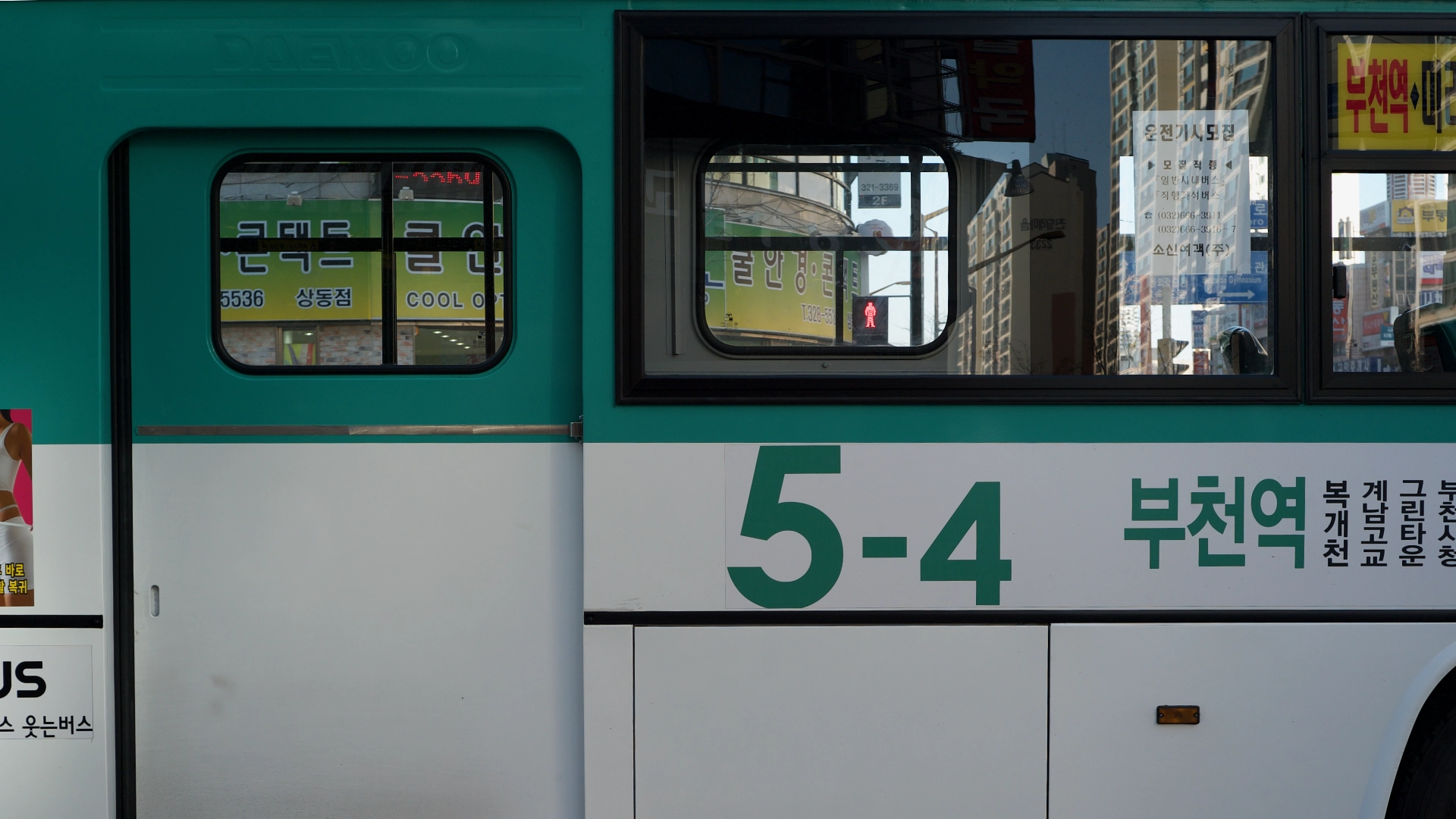
The commute might be the hardest part for most people. At least it was for me.
When we lived in Korea, I'd walk to the subway and then take a taxi to the gym, and then walk back to the subway after class. 35 minutes there. Upwards of an hour back. Eventually my friends found out how I was getting there.
Wide-eyed disbelief.
They explained there's a bus outside the gym that drops me off outside my place and walked me to the stop and made me get on.
But even after that, the weight of the lifestyle there would weigh on me.
Extra heavy in monsoon season. The constant humidity. Hot summers and brutal winters—even for a Canadian. My attendance would be spotty, on-again, off-again until I was ready to start the whole process over—I never figured this out before we moved back.
I settled into my next gym—either a fifteen minute walk or drive away. Then we moved a little further away and it would take me 20 minutes to drive to the same place.
Totally manageable.
But then we dumbassed into something much better.
Our landlord sold the duplex we were living in. We needed a new place that allowed pets during one of Victoria's proper housing shortages.
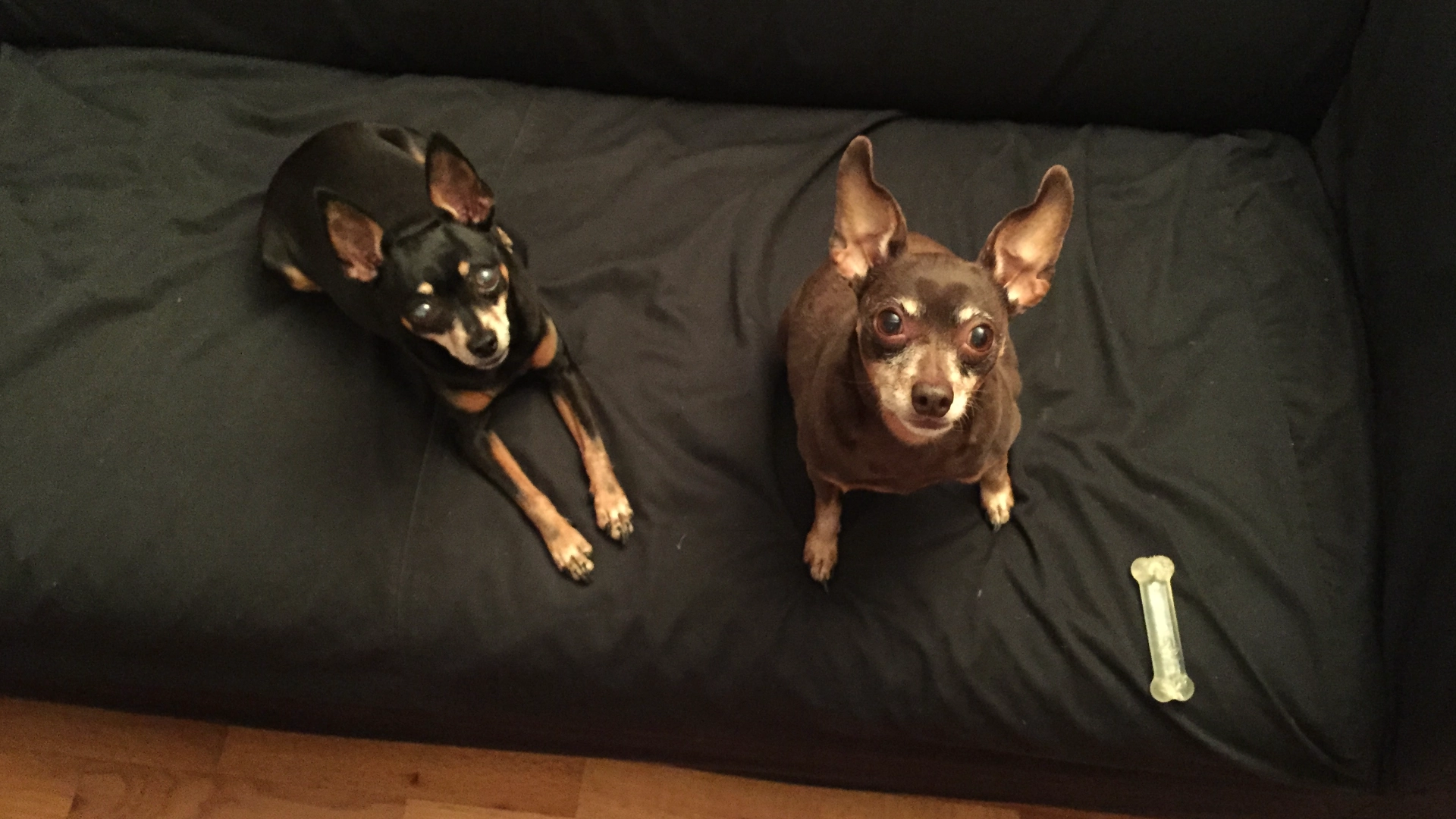
We were panicking.
Jessica mentioned this to a friend of hers who had a condo with a tenant moving out. We looked at it and although it was smaller than we were used to it was literally behind the gym.
A two minute walk.
A few years later the gym moved, and the commute was ugly.
An annoying left turn near a busy intersection, then through the busy intersection and across a bridge and then nothing but congestion the whole way there.
I endured it. I loved my gym.
Then our friend sold the condo.
Homeless again.
But we didn't have the dogs any longer and there was much more flexibility in what was available to us.
Jessica suggested we try the same thing again—live within walking distance to the gym. It was closer to her workplace and the parking would be easier for me.
Now we're five minutes from class.
No traffic. It's almost impossible to run late. No motivation, whatever. Proximity gets me there.
What's For Dinner?

This is the worst question.
Be with someone for as long as Jessica and I have (>23 years) and it's probably one of the questions that comes up the most. It's a problem deciding what to eat if we go out. But cooking? That's also shopping, prep, pickup and cleanup.
It's time consuming and expensive.
So we did the trendy thing and tried the meal kit delivery services, which cut down on a lot of the grocery shopping.
But now we were cooking unfamiliar meals with unfamiliar ingredients that we never really enjoyed, and we were still spending sixty to ninety minutes a night making dinner for ourselves.
And I didn't really enjoy any of the meals we were making. Some were OK, but the ingredients all seemed like repackaged stuff from Sysco or items I wouldn't select myself at the grocery store.
And then we went plant-based and everything "vegetarian" we tried out could have been better described as "cheese-based".
Jessica looked at the prices we were paying and did some homework and found FreeBeets—a local meal prep service using local ingredients. Done-for-you meals that are delivered on Sunday for the week ahead that are refrigerated and microwaved when it's time to eat.
We've done collabs with them because I genuinely love the service. I'll pitch them to anyone who will listen, and if you're in Victoria, give Igor a shout if you're as frustrated as I was with "what's for dinner?"
We went from sixty to ninety minutes a night to three minutes each to heat each meal, then ten minutes of eating, then sixty seconds of cleanup.
And we love the food.
I did the math and it saves us upwards of 78 hours a year—more than three days of kitchen time.
Here's what it means for jiu-jitsu—I can help out at the kids class, come home, microwave dinner and still make the late night session. Before FreeBeets this would have been impossible.
The Pattern
All of these changes came from one insight: use the motivation buzz to systematically remove friction. Then let it compound.
When I'm in the state of motivation, everything seems possible. That little euphoria hits and I think what I'm trying to do will be easy.
I used to try and ration that feeling. Stretch it out. Make it last.
It was the wrong move.
The correct move is to recognize it's a temporary thing and use it to hunt for friction.
When motivation is high, I look at the Chain of Ability:
- Time - Where are the savings? What can I automate or eliminate?
- Money - Can I afford this? Do I need to find ways to save money or spend more here?
- Physical Effort - How can I make this easier?
- Mental Effort - What decisions can I remove?
- Routine - how does this fit into what I do? Where does it create friction?
Attending class became easier.
Now it feels automatic.
Next week: the Minimum Effective Dose
In Victoria, British Columbia?
Lolakana Martial Arts has 20+ classes a week for both adults and kids in Brazilian Jiu-Jitsu, No-Gi Jiu-Jitsu and Kickboxing.
Free parking.
Indigenous-owned.
Come check us out.


